At Geek Vibes we've written system prompts of 60, 80, even 120 lines for the code agents we use with clients: style rules, mandatory steps, reminders to "check your work before finishing." This week, Claude Code's creator told us — publicly, no beating around the bush — that this instinct is probably slowing us down.
It's an uncomfortable turn for anyone who's spent months accumulating rules in their .claude.md or in their internal agent's system prompt. The logic that dominated the last two years was "if the model fails, add an instruction." The logic Anthropic is proposing now is the inverse: if the model fails, first check if it has old guidance it no longer needs.
What exactly happened
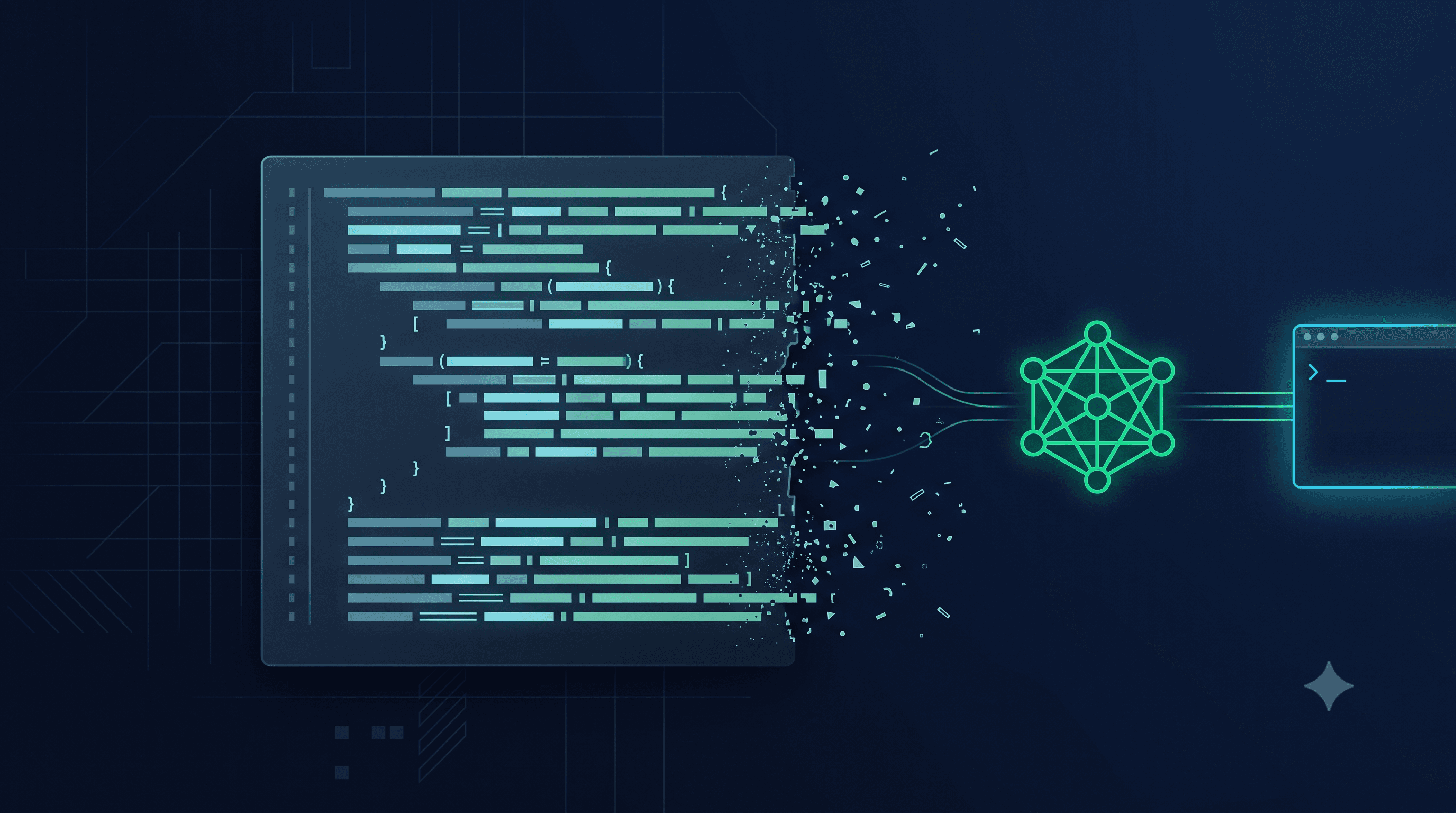
Boris Cherny, Anthropic engineer and original creator of Claude Code, shared on the Y Combinator podcast (Startup Podcast, conversation with Diana Hu published July 27, 2026) that his team removed over 80% of Claude Code's system prompt when Claude Opus 5 arrived, launched July 24. The result wasn't degradation: the model performed better with fewer instructions.
It's not an isolated anecdote. The official prompting guide for Opus 5 that Anthropic published (cited by MarkTechPost the same day of launch) directly asks developers to delete their verification prompts. Instructions like "include a final verification step" now cause over-verification, because the model already checks its own work by default.
The method behind it: "ablation"
Cherny's team applies a discipline they call ablation, and it's uncomfortably simple:
- Delete the entire system prompt.
- Use the product and observe where the model fails.
- Add instructions back, one line at a time, only when the model repeatedly fails at the same thing.
- Never add a line "just in case" — the model will read it every time you use it, and that has a cost too.
Cherny also revealed that Claude Code has an undocumented environment variable, CLAUDE_CODE_SIMPLE=1, that strips all system prompts — including tool prompts — and the team uses it internally as a calibration check. His practical recommendation for any team using Claude Code: delete the .claude.md files, skills and hooks every six months and observe what the model is capable of doing without that guidance before adding rules back in.
The case that made it tangible
The example circulating this week is hard to ignore: the team gave Opus 5 a single instruction — "use a workflow" — to completely rewrite Bun's runtime, over 100,000 lines of code in Zig, to Rust. Eleven days and thousands of parallel agents later, it was done. Nobody wrote a step-by-step plan or intermediate milestones; the model verified its own result against Bun's test suite and fixed failures until everything passed.
Anthropic already operates this way internally: it runs between 20 and 30 autonomous routines daily on its own repositories (CLI, iOS, Android, desktop) for dead code cleanup, feature flag elimination at 100% rollout, and test writing in uncovered zones. Each routine is a single-sentence prompt.
It's not just Anthropic
The same week this case became known, various engineering teams — according to July reports in AI-applied-to-development media — have been discussing a parallel trend: adopting a standardized "harness" approach (common prompts, policies, evals and telemetry) that works the same across Claude Code, GitHub Copilot, OpenCode or Codex, rather than betting on a single provider. Both trends point in the same direction: less custom configuration per tool, more measurement and verification discipline that holds up even when you switch models or providers.
Why this is no longer just a lab experiment
The reason Anthropic feels comfortable loosening control is that the problem that made total autonomy dangerous — prompt injection — stopped being a dominant risk. In the Gray Swan benchmark, the success rate of instruction injection attacks fell from 5.5% in Opus 4.8 to 2.0% in Opus 5; in browser environments tested with Claude Cowork, with auto mode enabled, the success rate reached 0% across 129 evaluated environments (source: Opus 5 system card, via MarkTechPost). That's what makes it defensible, and not just striking, to hand an agent multi-day tasks without line-by-line supervision.
What this means for agencies and developers
It's not about stopping writing instructions. It's about treating each model generation as a new collaborator with a different personality, not as a fixed API you configure once and forget. Some direct implications for those of us building with AI every day:
- Audit your scaffolding every time you switch models. What compensated for Sonnet 3.5 or Opus 4.8 weaknesses might be slowing down Opus 5. Check
.claude.md, custom instructions, hooks and system prompts when you update versions, not just when something breaks. Treat each release as a new collaborator worth getting to know from scratch, not as an API you configure once. - Stop over-specifying steps. "Do X, then Y, then Z" is a habit inherited from weaker models. Current models perform better with clear objectives and automatable verification criteria than with line-by-line micromanagement.
- Invest in verification, not endless prompt engineering. Test suites, pixel-by-pixel comparison, internal benchmarks — that's what lets an agent self-correct without a human becoming the bottleneck. It's also where the budget hours that used to go into polishing instructions should go.
- Don't look for "the universal trick." There's no master prompt that works for all tasks and all models; you have to test empirically with each release, document what fails and adjust from there.
For an agency, this changes how you quote and deliver AI work: fewer hours sunk into fine-tuning giant instructions, more hours building the verification infrastructure that lets the model work alone with confidence. It also changes the conversation with the client: instead of selling "a perfect prompt," the value is in the verification system that makes the agent's result reliably trustworthy, release after release.
At Geek Vibes we've already started applying this ablation discipline to the agents we build for clients, and we'll share results in the coming weeks. If you want us to audit your team's AI stack or build code agents tailored to your product, write to us at comercial@geekvibes.agency.