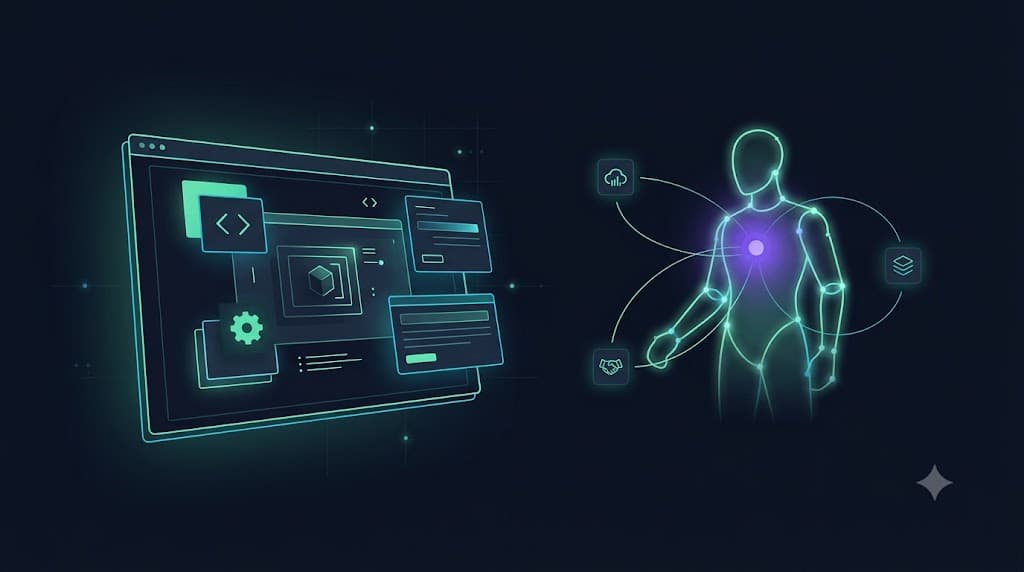
El 24 de junio, Figma anunció en su conferencia Config 2026 una actualización que cambia una pregunta que llevamos años haciéndonos en la industria: ¿quién construye las herramientas que usa un equipo de diseño? La respuesta, cada vez más, es "el equipo mismo, sin escribir una línea de código". Figma lanzó plugins generativos, code layers y una versión ampliada de su agente conectado por MCP (Model Context Protocol) a herramientas como GitHub, Notion, Slack y Atlassian. No es una actualización cosmética. Es un cambio de quién tiene permiso para construir dentro del flujo de diseño — y eso nos afecta directamente como agencia.
Qué anunció Figma exactamente
Config 2026 trajo varias piezas, pero tres son las que más nos importan a quienes vivimos entre diseño y desarrollo:
- Plugins generativos: describes la herramienta que necesitas —comportamiento, controles, parámetros— y el agente de Figma la construye dentro del archivo, sin entorno de desarrollo local ni conocimiento de la API de plugins. Empezaron a habilitarse de forma gradual el mismo 24 de junio.
- Code layers: cualquier capa de diseño se puede convertir en una capa de código interactivo con un clic o un prompt, editable por todo el equipo desde el canvas. El rollout arranca en julio, por lista de espera.