On October 9, Google Cloud published a quiet release note saying, in so many words, that you can no longer buy new subscriptions to Gemini Code Assist Standard or Enterprise. The ones already out there will renew automatically for the rest of 2026, but that automatic renewal stops in 2027. Sounds like just another admin tweak, but it's the second time in less than four months Google has shut down — or repackaged — an AI code tool carrying its own brand. The first was in June, when Gemini CLI and Gemini Code Assist for GitHub stopped working for consumer accounts. It matters today because at Geek Vibes we have clients and partners who built part of their workflow around Code Assist, and Google's message — once again — is: move to Antigravity.
What the release note actually says
Google Cloud's note is clear on what it covers and silent on what it doesn't. According to the text, "sales of Gemini Code Assist subscriptions are ending": you can't buy new Standard or Enterprise plans as of October 9. What does stay:
- Subscriptions already active renew automatically for the rest of 2026.
- That automatic renewal stops in 2027, at which point those accounts have no active plan if they haven't migrated by then.
- Google didn't publish transition pricing, a migration tool, or an exact final shutdown date — just the renewal window.
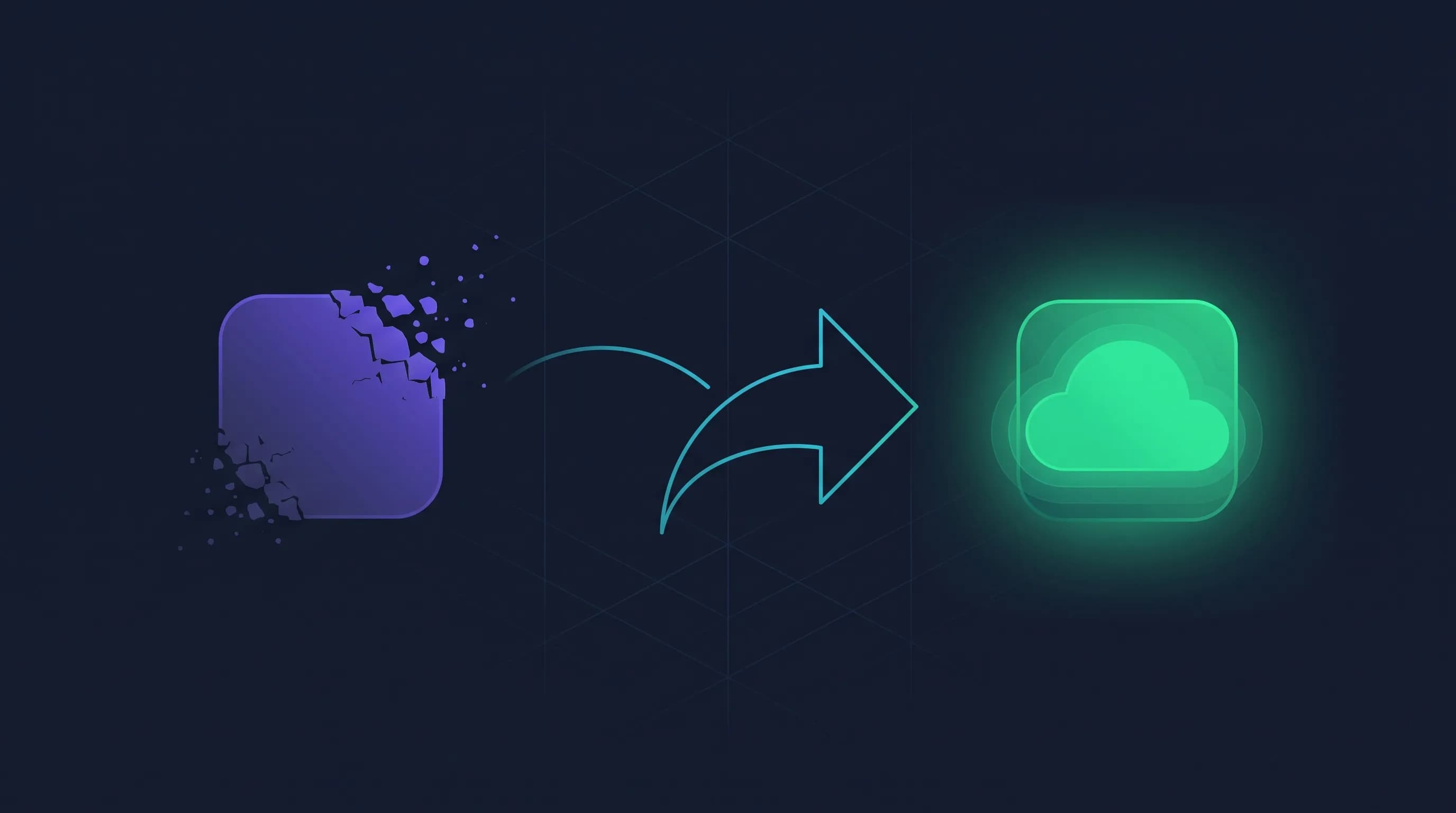
The recommended replacement is Antigravity, available through eligible Gemini Enterprise subscriptions and the Gemini Enterprise Agent Platform. In other words: the standalone product vanishes and what's left is a feature inside a bigger, pricier package to sell by seat or by consumption.
It's not the first time: the pattern started in June
This didn't come out of nowhere. On June 18, 2026, Google had already shut down Gemini CLI and Gemini Code Assist for GitHub for consumer accounts, with the GitHub app completely out of service by July 17. The replacement at that point was Antigravity CLI, part of the same Antigravity platform that today also absorbs the paid version. What stands out: Google was honest that Antigravity CLI didn't have 1:1 feature parity at launch, though it kept what mattered most — Agent Skills, Hooks, Subagents, and Extensions.
So the actual timeline is this: in June, Google kills the free/consumer tier of Code Assist. In October, it kills the paid tier. Both times the destination is the same: Antigravity. It's not a comms bug or a roadmap slip — it's a forced migration in two acts, four months apart, of the same product.
Why Google is doing this
The clue is in what Google is building in parallel. During that same week in October, press reports described Google consolidating its enterprise AI into a single Gemini agent that combines chat, task management, and code generation, with Workspace identities and spending controls for "coworker agents" that run multi-day flows across Workspace, Microsoft 365, and Slack. Antigravity stops being an editor plugin or an isolated CLI and becomes the gateway to that unified agent.
From a business angle, this makes sense for Google: selling a consumption platform (credits, enterprise seats, agents that execute work) is more profitable and more defensible than selling a flat subscription to an AI autocomplete tool that pretty much every competitor now gives away for free. The problem is that business logic gets resolved by discontinuing branded products every few months, and whoever pays the cost of each one of those jumps is the team that already had that tool baked into their day-to-day.
What this means for agencies, developers, and your product
If your stack — or your client's stack — has Gemini Code Assist anywhere in the pipeline, this isn't just a release note to ignore. And even though it's Google today, the pattern applies to any branded code tool from a hyperscaler:
- Audit how tied you are to a branded product, not an abstraction layer. If you use Code Assist through the Gemini API, the damage is lighter than if your team depends on the specific extension or CLI — those are the ones Google has killed twice this year.
- Budget migration time as part of the real cost of any "free" or flat-price tool from a hyperscaler. It's not free if every 4-6 months you have to move flows, prompts, and configs somewhere else.
- Diversify your team's code tooling across at least two code agents — Antigravity, Claude Code, Cursor, Copilot — so the next discontinuation announcement from any one of them is a hassle and not a production crisis.
- Don't sell your clients an architecture based on a single branded product from a single vendor without spelling out in writing the risk that product might change brand, price, or existence before the project ends.
At Geek Vibes we keep repeating this lesson with each episode like it — Cursor losing access to OpenAI models, Anthropic pausing credit programs, and now Google killing its own code tool twice in one year. The common denominator is never the specific tool: it's that the pace of change from AI providers is faster than the lifecycle of a typical agency project, and building like that weren't true gets expensive.
If you're evaluating how exposed your team's AI stack — or your client's — is to this kind of change, or if you've already had to migrate something the hard way, reach out to us at comercial@geekvibes.agency and we'll review it together before it catches you in production.