OpenAI y Anthropic van a bolsa: qué significa para los que construimos sobre sus APIs — Geek Vibes Blog
Inteligencia Artificial · 7 min · 16 jun 2026
OpenAI y Anthropic van a bolsa: qué significa para los que construimos sobre sus APIs
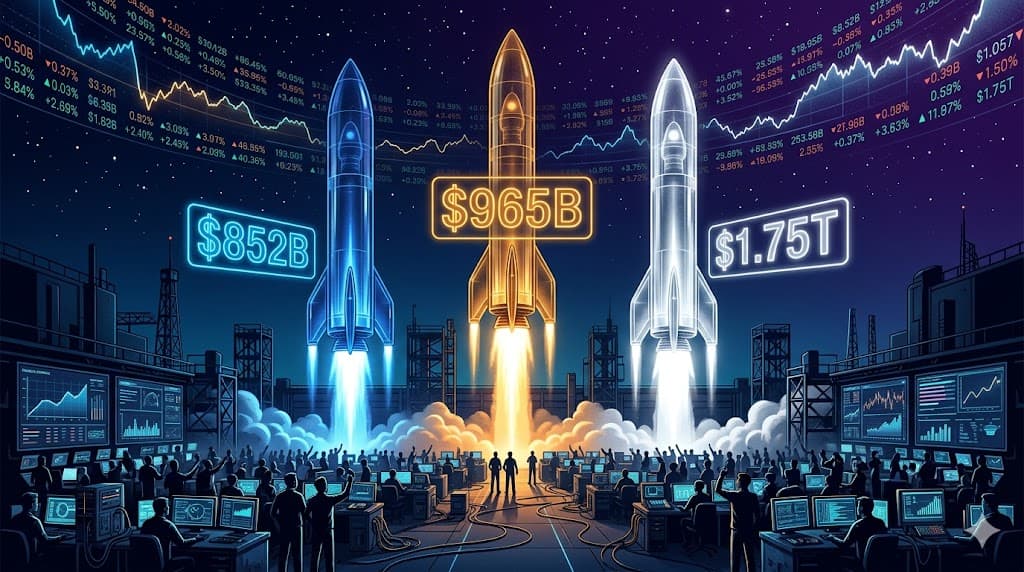
OpenAI filed su S-1 el 8 de junio ($852B valuación, $25B en ingresos, pérdidas de $1.22 por cada dólar ganado). Anthropic lo hizo el 1 de junio ($965B). SpaceX-xAI ya tiene roadshow activo ($1.75T). Tres IPOs simultáneos, ~$3.6 trillones en valuación combinada. Te explicamos por qué esto cambia el pricing de APIs, el roadmap de modelos y las decisiones de stack que deberías tomar hoy.
Hoy es 15 de junio de 2026 y el panorama de IPOs de IA está en su punto más denso de la historia. OpenAI filed su S-1 confidencial el 8 de junio, una semana después de que Anthropic hiciera lo mismo el 1 de junio a una valuación reportada de $965 mil millones. SpaceX ya tiene su roadshow activo, con financials públicos desde el 20 de mayo, luego de su adquisición de xAI en febrero de 2026. Tres IPOs simultáneos, aproximadamente $3.6 trillones en valuación combinada. Es el momento más significativo de la industria de IA desde el lanzamiento de ChatGPT. The New StackCosmic
Pero la pregunta que nos importa a los que construimos producto digital no es "¿cuándo puedo comprar las acciones?" Es: ¿qué cambia para mi stack, mi pricing y mis decisiones de arquitectura?
Los números que hay que tener en la cabeza
Antes de entrar al análisis, los datos duros:
OpenAI pasó de $2 mil millones en ingresos anualizados a finales de 2023 a roughly $25 mil millones para febrero de 2026, un crecimiento de 12.5x en poco más de dos años. Para referencia, Google tardó más de una década en alcanzar ingresos anuales comparables.
¿Te resuena algo de esto?
Si vienes operando con piezas que no terminan de conectar, lo diagnosticamos juntos en 30 min.
El problema está en los costos. OpenAI pierde $1.22 por cada dólar que gana. El margen operativo no-GAAP del Q1 2026 fue de negativo 122%. La pérdida operativa proyectada para 2026 es de $14 mil millones. Y además, tiene planes de gastar $50 mil millones en infraestructura de cómputo solo en 2026. AI Tool DirectoryAI Tool Directory
El margen bruto de OpenAI fue del 33% en 2025, bajando desde el 40% de 2024, mientras que los ingresos casi se triplicaron en el mismo período. La razón: costos de inferencia. Blink
Anthropic, por contraste, filed confidencialmente el 1 de junio a una valuación reportada de $965 mil millones — y como mencionamos en un post anterior de este blog, ya es rentable. Eso cambia completamente la narrativa financiera de cada empresa. Medium
Por qué los IPOs cambian el juego para los que usamos las APIs
1. Las empresas públicas optimizan para márgenes, no para developer experience
Este es el cambio más importante y el menos discutido. Hoy, tanto OpenAI como Anthropic pueden tomar decisiones de pricing y product que priorizan adopción y crecimiento de developer base. Eso se traduce en: precios bajos de API, modelos gratuitos o casi gratuitos en los tiers menores, features agresivas para retener developers.
Una vez que cotizan en bolsa, la presión de los earnings trimestral va a empujar hacia expansión de márgenes. La pregunta no es si van a subir precios — es cuándo y en qué forma. Podría ser: deprecated de modelos gratuitos, rate limits más estrictos en tiers menores, o features enterprise detrás de paywall que hoy son accesibles.
Lo que recomendamos: si tienes arquitectura crítica de producto sobre una sola API, empieza a explorar multi-model routing ahora, no después del IPO.
2. Los financials públicos van a resetear valuaciones de todo el sector
La registración pública de OpenAI va a exponer su revenue y márgenes reales por primera vez, dando a la industria un punto de datos concreto contra el cual medir las valuaciones privadas del sector de IA. The New Stack
Esto afecta a todos los que tienen startups de IA en el pipeline de inversión, y a todas las agencias que venden proyectos de "IA" a clientes enterprise. Los múltiplos de valuación que se han aplicado a proyectos de IA privados (muchos de ellos sin revenue real) van a ser cuestionados cuando los S-1 revelen la realidad de costos de inferencia.
Para agencias: los clientes que han estado justificando presupuestos de IA sobre proyecciones optimistas van a tener conversaciones más difíciles con sus CFOs después de que los S-1 salgan públicos.
3. El riesgo de vendor lock-in se hace más real
Hoy, cambiar de OpenAI a Anthropic (o viceversa) es relativamente simple: ajustar el endpoint, adaptar el prompt, listo. Una vez que ambas sean empresas públicas con presión de retención de clientes, los incentivos para crear switching costs propios van a aumentar: contratos enterprise con lock-in, SDKs que divergen del estándar, features exclusivas que no tienen equivalente en la competencia.
Arquitectura resiliente a este riesgo: diseña tu capa de integración de IA con una abstracción encima del proveedor. No llames directamente a anthropic.messages.create() desde tu código de negocio — usa una capa de servicio interna que puedas redirigir. El costo de implementar esa abstracción hoy es mínimo. El costo de no haberla hecho cuando necesitas migrar es alto.
4. La financiación circular como riesgo sistémico
NVIDIA ha señalado que podría invertir hasta $100 mil millones en OpenAI; OpenAI a su vez compromete cientos de miles de millones en cómputo, gran parte corriendo en silicio de NVIDIA; Oracle construye los data centers y tiene a OpenAI como cliente ancla mientras depende de la misma cadena de suministro de chips. AI Tool Directory
Este loop de financiación circular va a ser el argumento más examinado por analistas en el roadshow. Si algún eslabón de esa cadena tiene un trimestre malo — NVIDIA, Microsoft, Oracle — el efecto downstream podría afectar disponibilidad y pricing de APIs de forma no lineal. No es probabilidad alta, pero es riesgo real que antes era opaco y ahora estará en el S-1 bajo "Risk Factors".
La carrera de los tres IPOs y qué dicen de la industria
OpenAI, Anthropic y SpaceX forman un pipeline de IPOs de IA estimado en alrededor de $3.6 trillones. Para que dimensiones: eso es más que el PIB combinado de México, Argentina y Colombia. Medium
Lo que cada IPO dice de la industria:
SpaceX + xAI: la apuesta de que IA + infraestructura física (cohetes, satélites, compute soberano) son el mismo negocio. Elon Musk apostando a vertical integration completa.
OpenAI: la apuesta del consumidor masivo. Aproximadamente 900 millones de usuarios activos semanales y un negocio enterprise en expansión rápida. La tesis: el que gana el consumer layer eventualmente gana el enterprise layer. Ariel Digital
Anthropic: la apuesta del developer y el enterprise B2B. Sin consumer product masivo, con márgenes mejores, con enfoque en safety como diferenciador de ventas en sectores regulados (salud, finanzas, gobierno).
Las tres tesis pueden coexistir. Pero para nosotros como agencia y constructores de producto, Anthropic es el proveedor cuya tesis más se alinea con cómo operamos — que es exactamente por qué Claude API es nuestro default en producción.
Lo que cambia en la práctica esta semana
Tres cosas concretas que estamos revisando en Geek Vibes a raíz de estos movimientos:
1. Diversificación de proveedor de modelos. En GV Proposals ya usamos Claude API. Estamos paralelizando pruebas con Gemini API para tareas específicas, no porque Claude sea inferior — sino porque arquitectura resiliente requiere que la decisión sea reversible sin costo alto.
2. Revisión de contratos con clientes enterprise que incluyen SLAs de disponibilidad. Los IPOs implican reorganizaciones internas, cambios de liderazgo y en algunos casos depreciación acelerada de modelos para mejorar márgenes. Nuestros contratos con clientes enterprise necesitan lenguaje claro sobre qué pasa si el modelo subyacente cambia.
3. Monitoreo de pricing en tiempo real. Activamos alertas en nuestro billing de Anthropic y OpenAI. Cualquier cambio de pricing en los próximos 90 días va a llegar con poco aviso — queremos capturarlo inmediatamente y evaluar impacto en proyectos activos.
Conclusión: el adolescente de la IA acaba de pedir sus credenciales de adulto
Los IPOs de OpenAI y Anthropic no son solo eventos financieros. Son el momento en que la industria de IA deja de operar con las reglas de las startups (crecer a cualquier costo, loss leaders en todo, hacer feliz al developer para ganar mercado) y empieza a operar con las reglas de las empresas públicas (márgenes trimestrales, guidance, analyst day).
Para los que construimos producto encima de estas capas, es una señal clara: el período de precios de API artificialmente bajos, acceso liberal a modelos potentes, y developer experience prioritizada sobre monetización tiene fecha de vencimiento. No mañana. Pero tiene fecha.
La arquitectura que construyas hoy debería ser capaz de sobrevivir a precios 2-3x más altos en la capa de modelo, o a tener que cambiar de proveedor con 30 días de aviso. Si no lo es, este es el momento de corregirlo.
¿Quieres una revisión de tu arquitectura de IA para evaluar resiliencia ante estos cambios? En Geek Vibes hacemos auditorías de stack en 2 semanas. Escríbenos a comercial@geekvibes.agency.
Estratégia & Negocio
Google dejó de vender Gemini Code Assist: es la segunda herramienta de código con IA que mata en 2026
El 9 de octubre, Google Cloud confirmó que deja de vender Gemini Code Assist Standard y Enterprise: las suscripciones activas se renuevan hasta 2026 y mueren en 2027. Es la segunda herramienta de código con IA que Google retira este año — en junio ya había apagado Gemini CLI. El patrón pesa más que el producto.