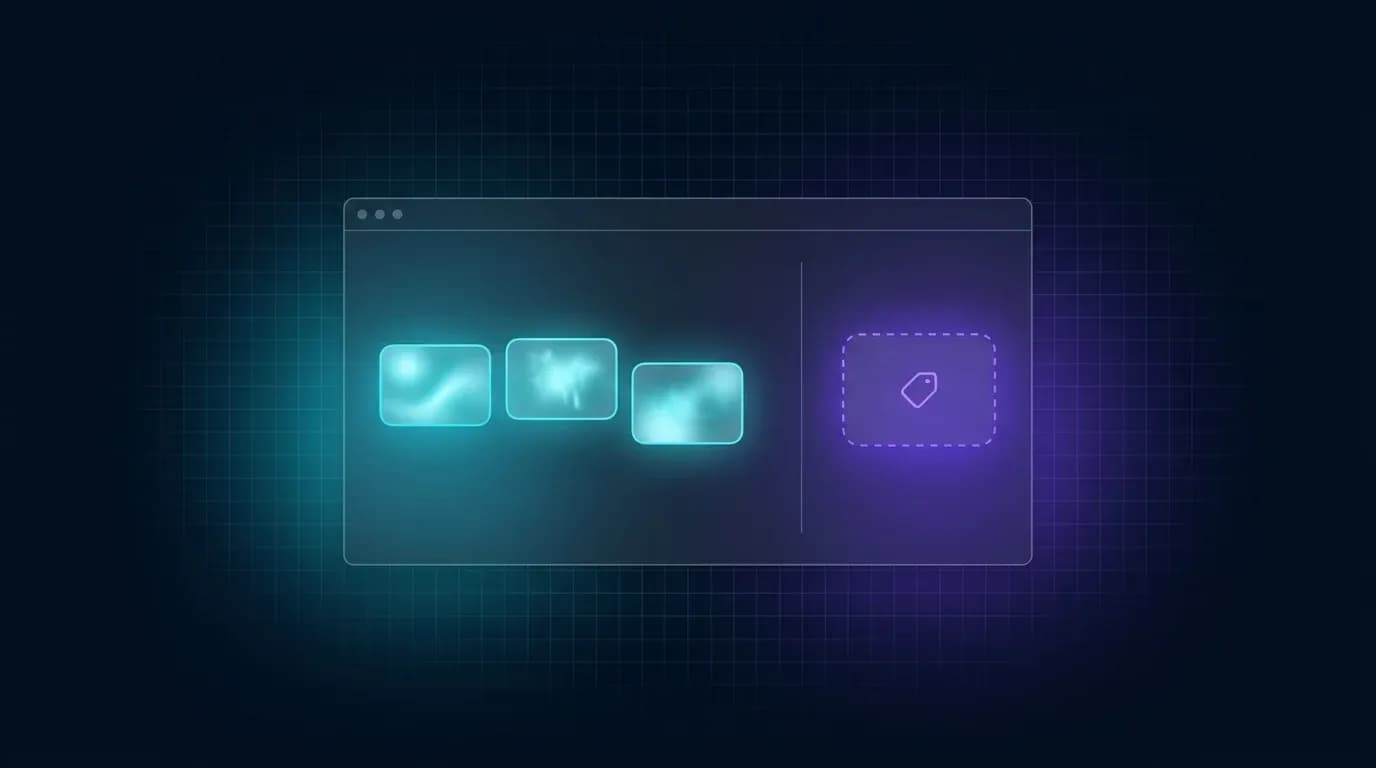
OpenAI confirmed this week that it will test a new visual ad format inside ChatGPT: product images with a "Learn more" button that appear during the image generation flow, clearly labeled and separated from what the user asked for. The test starts this month in the United States with an initial group of advertisers, but what matters most to us at Geek Vibes is another piece of data in the same announcement: the geographic expansion of ChatGPT's ads business now includes Mexico, Brazil, the United Kingdom, Japan and South Korea, in addition to the markets where it already operated (the United States, Canada, Australia and New Zealand). It matters today because the question is no longer whether OpenAI will monetize with advertising — that was decided months ago — but whether LATAM will have to start thinking of ChatGPT as a real media channel, with its own budget, creative and measurement.
What exactly OpenAI announced
The new format isn't the first ad OpenAI has tested this year — it had already launched text ads and the so-called conversational "sponsored agents" in September. What's new is that the ad now lives inside the image generation moment, a place where there was previously no kind of commercial interruption. Along with the format, OpenAI announced a measurement layer designed to make this feel like a performance channel, not pure branding:
- Integration with Hightouch, Tealium and LiveRamp for conversion tracking.
- Attribution partners: AppsFlyer, Triple Whale, Adjust, DV Rockerbox, Northbeam, Branch, Singular, Kochava, Airbridge and Tenjin.
- Incrementality partners: Haus, Measured and WorkMagic.
- Brand safety evaluated by DoubleVerify and Integral Ad Science, plus a "Negative Phrases" feature to exclude unwanted placements.
According to data OpenAI itself shared from early adopters, WeightWatchers reported a cost per acquisition 15.3% lower than its paid search benchmark (measured by DV Rockerbox), the wellness brand Dose got 67% of its incremental purchases from new customers (WorkMagic), and Portland Leather reported that 93% of the visits coming from ChatGPT Ads were from new users (Triple Whale). These are numbers any media buyer would love to see in Google Ads.
The problem: generating an image is not the same as searching for something to buy
Here's the angle almost nobody is covering with the enthusiasm it deserves. Donatas Smailys, CEO of the ad-tech company Billo, put it simply: "someone generating an image in ChatGPT isn't shopping." Search advertising works because it captures active intent — someone searching for "running shoes" will probably buy running shoes. Asking ChatGPT to draw an astronaut cat is not a signal of intent to buy anything in particular, and OpenAI still hasn't clearly explained how it will decide which ad to show you at that moment, or whether the ad appears while the image loads, after it's generated, or is dynamically generated based on the prompt. That lack of transparency in targeting is exactly what makes several analysts doubt the format will convert the way the spec sheet promises.
The financial backdrop nobody mentions in the press release
OpenAI is valued at more than 500 billion dollars, but according to recent financial reports it loses more money than it makes and carries more than a trillion dollars in infrastructure commitments — chips and data centers — to sustain ChatGPT. With more than 800 million users on the free plan who generate no direct revenue, advertising stops being a product option and becomes the most obvious monetization lever they have left. Miranda Bogen, of the Center for Democracy and Technology, warns about the underlying risk: people use these chatbots "as companions and as advisors," and mixing that with paid advertising opens the door for the system to "exploit the user's trust to sell them an advertiser's products." OpenAI insists that ads "will not influence the answers ChatGPT gives" and that it won't use prompts or personal information for targeting — promises that, as Forrester's Paddy Harrington neatly sums up, will be under constant pressure as the need for revenue grows: "if the service is free, you are the product."
Why Mexico specifically matters now
That Mexico is part of the first wave of expansion — alongside Brazil, and not later, as usually happens with new Silicon Valley features — is a sign that OpenAI sees real user volume and, probably, potential advertisers in the region. For an agency or a brand in LATAM this doesn't yet mean "put budget in now": it means there's a window of three to six months to understand the format, check which attribution partners already have local integration, and decide whether it makes sense to pilot before inventory saturates and costs per click rise, as happened with Meta Ads in 2015 and TikTok Ads in 2021.
What this means for agencies and marketers in LATAM
If you manage media budget for a client, this week's task isn't to open a ChatGPT Ads account — it's to audit how ready your measurement stack is for a channel that doesn't have a playbook yet. Before piloting, verify three things:
- Real attribution, not vanity metrics. If your MMP (AppsFlyer, Adjust, Singular and the like) is already on OpenAI's partner list, you have a way to measure incrementality from day one. If not, you'll be reporting impressions without knowing whether they generate sales.
- Creative designed for the moment, not recycled from Meta. An ad that interrupts an image generation flow needs a different message than one that interrupts an Instagram scroll — the user's intent is different.
- Realistic performance expectations. The success stories OpenAI published come from brands with budget and robust measurement teams. Don't assume you'll replicate a CPA 15% lower without that same infrastructure behind it.
The underlying lesson, the one that applies beyond ChatGPT: every time an AI platform opens its first ads channel, the first three to six months are the moment of least competition and, almost always, the lowest cost per result — but only if you go in with clear measurement, not with blind budget.
At Geek Vibes we're already putting together the attribution stack audit checklist for clients who want to evaluate this channel without burning budget on a badly measured test. If you'd like us to review it together for your brand or your client's, write to us at comercial@geekvibes.agency.