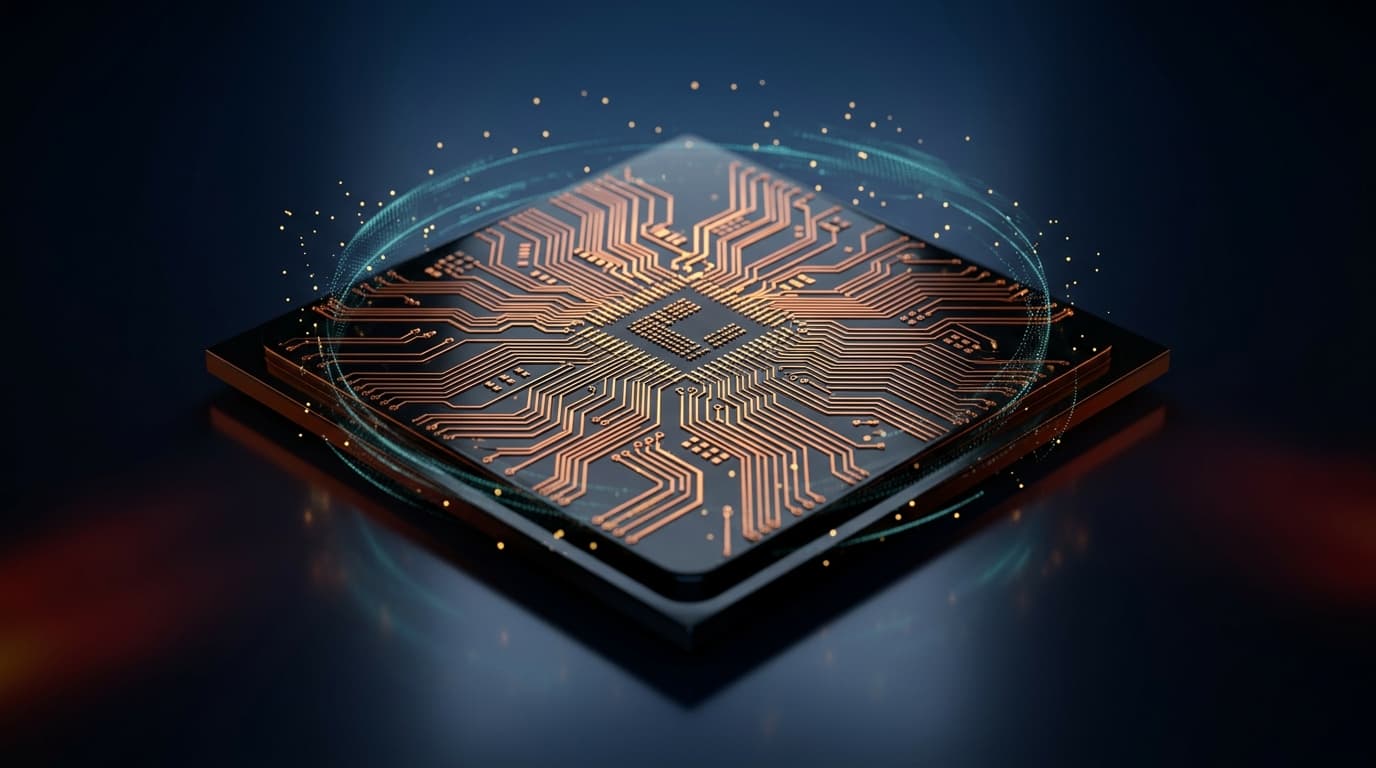
Cosa que casi nadie en marketing o diseño está mirando, pero debería: AMD ya arrancó producción de sus procesadores 6th Generation EPYC "Venice", construidos en el proceso de 2nm de TSMC. Es el primer producto de high-performance computing en entrar a producción en ese nodo. Ya planearon también un "Verano" como siguiente paso.
¿Por qué te debería importar si tú vendes ads, diseño o consultoría? Porque la infraestructura de cómputo define el precio de toda la IA que estás usando. Y los movimientos en infraestructura anticipan, con 12-18 meses de adelanto, dónde se va a poder construir producto y dónde no.
La capa que casi nadie ve
La conversación pública sobre IA pasa por tres capas, pero solo se discute la primera:
Capa 1 — Modelos y productos: ChatGPT, Claude, Gemini, Perplexity, Copilot. Esto es lo que sale en TechCrunch y The Verge.
Capa 2 — Infraestructura de software: orquestación, fine-tuning, vector databases, MCP, agentes. Se discute en Hacker News y entre developers, pero no en el mainstream.
Capa 3 — Infraestructura de hardware: chips, fabs, energía, redes. Casi nadie habla de esto fuera de SemiAnalysis y un par de newsletters técnicos. Pero esta capa define los costos de todo lo de arriba.