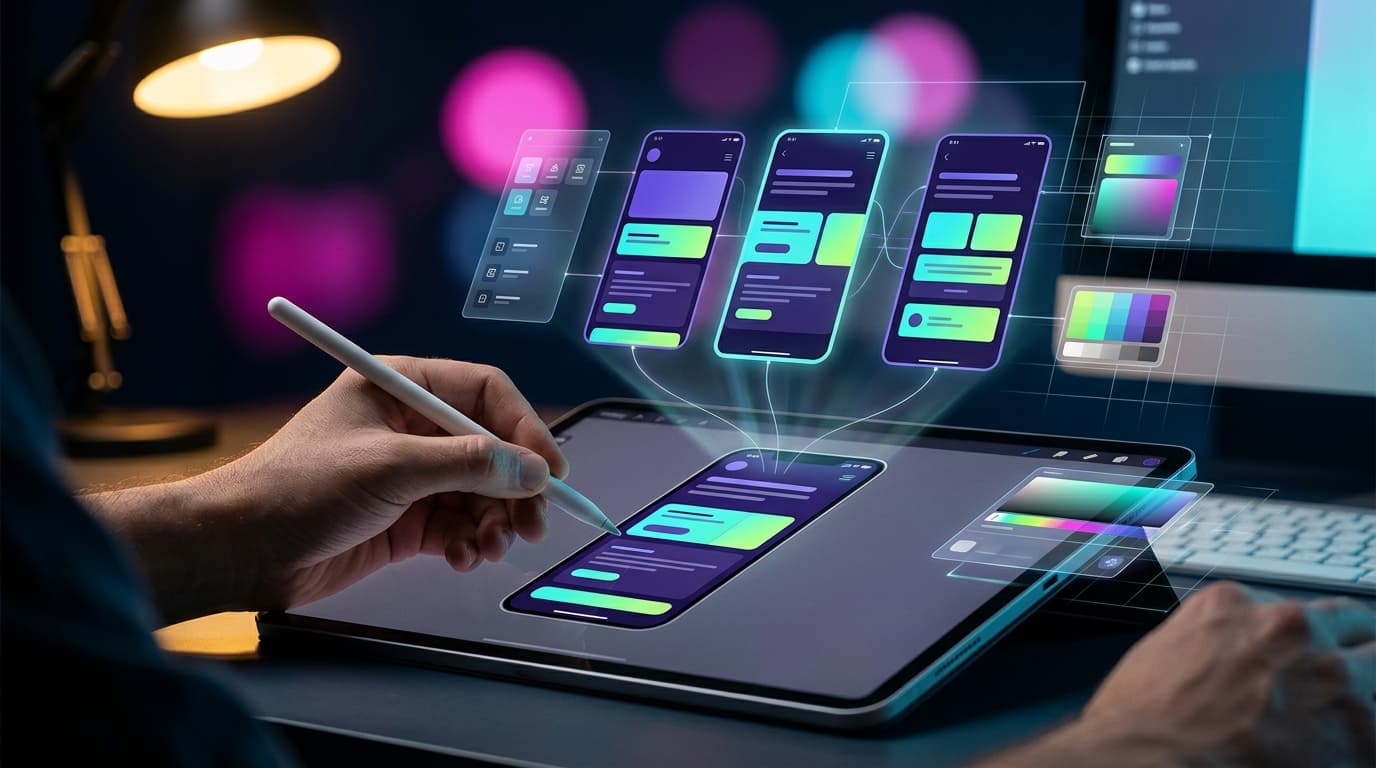
El State of the Designer 2026 de Figma encuestó a 906 diseñadores y trae el dato que ya no admite debate: el 72% usa IA generativa en su workflow, y el 91% dice que mejora la calidad de sus outputs, no solo la velocidad. Si todavía hay alguien en tu equipo discutiendo si "vale la pena" integrar IA al proceso, la conversación ya pasó. Toca decidir cómo, no si.
El estado real de Figma AI en 2026
Figma ya no es "una herramienta con algunas features de IA". Es un ecosistema donde la IA permea cada etapa: ideación, drafting, refinamiento, handoff y publicación. Estas son las features que más estamos usando:
Replace content
Genera texto realista para reemplazar lorem ipsum. Suena trivial, pero cambia los reviews con stakeholders: ver un mockup con copy realista en lugar de "lorem ipsum dolor" reduce el ruido en feedback y acelera aprobaciones.
Make an image
Generación de imágenes contextual dentro del mismo Figma. Útil para placeholders de hero images, ilustraciones decorativas, fondos. No reemplaza a un ilustrador profesional para deliverables finales, pero acelera la fase de exploración brutal.
First Draft
Drafts iniciales de UI desde prompts en lenguaje natural. "Diseña una landing page para una agencia de viajes con CTA de booking" genera 3-5 variaciones que sirven como punto de partida. No las uses tal cual — son scaffolding, no producto final.