GEO, AEO y SEO: la triple capa de visibilidad que ya no es opcional — Geek Vibes Blog
Marketing · 5 min · 25 may 2026
GEO, AEO y SEO: la triple capa de visibilidad que ya no es opcional
El 31% de los usuarios en EE.UU. ya usa búsqueda con IA generativa y el overlap entre Google y citas de LLMs bajó del 70% al 20%. SEO solo ya no alcanza. Te explicamos cómo combinar SEO + AEO + GEO para que tu marca aparezca en ChatGPT, Perplexity, Gemini y Google AI Overviews.
Si todavía estás vendiendo "SEO" a tus clientes como si fuera 2018, estás llegando tarde. La distribución de tráfico cambió, la forma en que los usuarios buscan cambió, y la pelea ya no es por aparecer en "los 10 blue links". Es por aparecer en la respuesta sintetizada que el AI le da al usuario antes de que decida si vale la pena hacer clic.
Los datos no son ambiguos.
Los números que deberían preocupar
Según EMARKETER, el 31.3% de la población de EE.UU. usará búsqueda con IA generativa en 2026. Más del 60% de las búsquedas en Google terminan sin clic a un sitio externo — el usuario tiene su respuesta en la página de resultados misma, vía AI Overviews o snippets directos.
Y el dato que cambia todo: investigación de Brandlight muestra que el overlap entre los top links de Google y las fuentes que citan los LLMs bajó del 70% a menos del 20%. Estar primero en Google ya no garantiza estar en la respuesta de ChatGPT, Perplexity o Claude. Son sistemas de evaluación diferentes con criterios diferentes.
La fórmula 2026: SEO + AEO + GEO
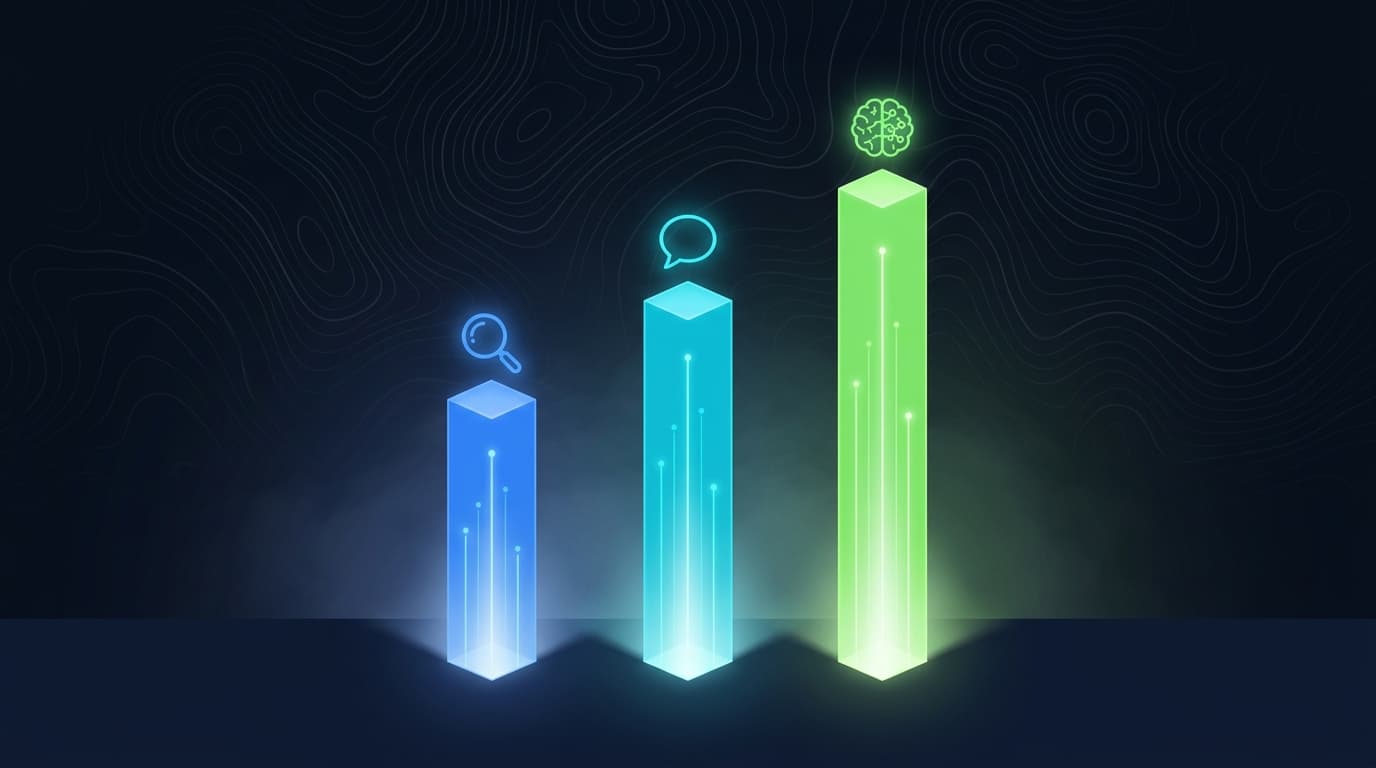
La estrategia que recomendamos a nuestros clientes en Geek Vibes tiene tres capas complementarias:
¿Te resuena algo de esto?
Si vienes operando con piezas que no terminan de conectar, lo diagnosticamos juntos en 30 min.
Sigue siendo la base. Indexabilidad, autoridad de dominio, backlinks de calidad, contenido relevante, velocidad de sitio, mobile-first, Core Web Vitals. Nada nuevo aquí — pero si tu base de SEO está rota, las otras dos capas no van a compensar.
AEO (Answer Engine Optimization)
Te posiciona para aparecer en respuestas directas: featured snippets de Google, AI Overviews, asistentes de voz, respuestas one-shot. Requiere contenido estructurado con respuestas claras y concisas a preguntas específicas. Schema markup de tipo FAQ, HowTo, y Article es no-negociable.
GEO (Generative Engine Optimization)
Te hace citable por ChatGPT, Perplexity, Claude, Gemini, y los próximos motores generativos. Esto es nuevo, está evolucionando rápido, y es donde más diferenciación hay por capturar hoy.
Cómo funciona realmente la cita en LLMs
Cuando un usuario le hace una pregunta a Perplexity o ChatGPT, no es que el modelo "busque en Google" y pase los resultados. Pasa algo más sofisticado:
1. Query fan-out: el AI rompe la pregunta original en sub-queries. Si alguien pregunta "¿cuál es el mejor VPN para Netflix en Europa?", el sistema busca "best VPN 2026", "VPN Netflix streaming", "VPN Europe servers" como queries separadas.
2. Recolección de fuentes: cada sub-query recupera entre 3-10 fuentes potenciales.
3. Síntesis: el modelo lee el contenido, identifica claims con respaldo, y construye una respuesta sintetizada que típicamente cita 2-7 dominios.
4. Citación: las fuentes citadas aparecen como referencias clicables.
El juego de GEO es maximizar la probabilidad de aparecer en los pasos 2-4. Y los criterios son distintos a SEO.
Lo que sí mueve la aguja en GEO
Después de auditar más de 30 sitios en los últimos meses, esto es lo que vemos que funciona:
1. Crawlability para crawlers de IA.
Revisa tu robots.txt. Muchos sitios bloquean GPTBot, ClaudeBot, PerplexityBot, Google-Extended sin saberlo. Si no quieres que te citen, no te citan. Decisión activa, no default.
2. Schema markup completo.
Article, Organization, Person, Product, FAQ, HowTo, BreadcrumbList. Los LLMs no leen schema directamente, pero los crawlers que alimentan los datasets de entrenamiento sí lo usan para entender el contenido más rápido y con menos ambigüedad.
3. Estructura de extracción.
H2/H3 claros que respondan a preguntas. Respuestas directas en los primeros 2-3 párrafos de cada sección. Bullets y listas para datos enumerables. Definiciones claras en el primer uso de cada término técnico.
4. Autoridad citable.
Citas a fuentes verificables (estudios, papers, reportes de empresas conocidas). Stats con fechas específicas. Quotes atribuidos. Los LLMs prefieren citar contenido que a su vez cita fuentes.
5. Definición clara de entidad.
Si eres "una agencia de marketing en Ciudad de México especializada en B2B SaaS", dilo exactamente así. Los LLMs construyen grafos de conocimiento — entidades bien definidas se citan más.
6. Frescura.
Los modelos prefieren contenido fechado y reciente. Mostrar "actualizado mayo 2026" no es cosmético — es señal de relevancia.
Lo que NO funciona (mitos a tirar)
Keyword density: irrelevante. Los modelos entienden semántica, no conteo.
Pillar pages gigantes de 8,000 palabras: funciona para SEO clásico, pero los LLMs prefieren respuestas concisas y bien estructuradas.
AI-generated content sin review: los LLMs detectan patrones de su propio output y lo penalizan en citas.
Backlinks de PBN: los AI engines no usan backlinks de la misma forma. La autoridad se mide en señales distintas.
El stack de medición
Métricas que importan para GEO/AEO, que no salen en Google Search Console:
Citaciones en LLMs: herramientas como Geoptie, LLMrefs, Brandlight monitorean menciones en ChatGPT, Perplexity, Gemini.
Brand mentions: menciones del nombre de marca en respuestas generadas, con o sin link.
Tráfico referido por LLMs: GA4 ahora segrega tráfico de chatgpt.com, perplexity.ai, claude.ai, gemini.google.com.
Tasa de conversión de tráfico AI-referred: spoiler — suele ser mayor que el tráfico orgánico clásico, porque el usuario ya llegó con intención clara.
Nuestro framework en Geek Vibes
Para clientes que arrancan, el flujo es:
Semana 1-2: auditoría técnica (robots.txt, schema, Core Web Vitals, crawlability).
Semana 3-4: auditoría de contenido (estructura, claridad, autoridad citable).
Mes 2: rediseño de páginas core para extracción + setup de monitoreo de citaciones.
Mes 3+: publicación continua optimizada + iteración basada en qué se está citando vs qué no.
GEO no es un add-on al SEO. Es prerequisito para seguir siendo visible.
¿Quieres saber si tu sitio está optimizado para AI search? En Geek Vibes hacemos auditorías de GEO/AEO en 2 semanas. Escríbenos a comercial@geekvibes.agency.
Estratégia & Negocio
Google dejó de vender Gemini Code Assist: es la segunda herramienta de código con IA que mata en 2026
El 9 de octubre, Google Cloud confirmó que deja de vender Gemini Code Assist Standard y Enterprise: las suscripciones activas se renuevan hasta 2026 y mueren en 2027. Es la segunda herramienta de código con IA que Google retira este año — en junio ya había apagado Gemini CLI. El patrón pesa más que el producto.