MCP es el USB-C de la IA: por qué junio 2026 cambia el stack de agencias — Geek Vibes Blog
Inteligencia Artificial · 7 min · 4 jun 2026
MCP es el USB-C de la IA: por qué junio 2026 cambia el stack de agencias
El 1-2 de junio 2026, cinco vendors (ZoomInfo, Salesforce, HubSpot, Microsoft, Gong) expusieron sus datos como capa gobernada vía MCP. Suena técnico, pero es el cambio más importante del año para quien construye producto, vende B2B o consume herramientas SaaS. Te explicamos qué es MCP, por qué cambia todo, y cómo lo estamos integrando en Geek Vibes.
Aviso de spoiler: la noticia técnica más importante de junio 2026 no fue un nuevo modelo. Fue que cinco vendors enterprise expusieron sus datos como capa gobernada accesible por agentes de IA vía MCP. ZoomInfo lanzó GTM.AI el 1 de junio. Salesforce, HubSpot, Microsoft Copilot Studio, Gong y otros se sumaron en cascada. Y aunque suena a noticia para developers, es el cambio más importante del año si:
Construyes producto digital.
Vendes B2B (especialmente outbound).
Operas con stack SaaS (que es prácticamente todos).
Te explico qué pasó, por qué importa, y qué estamos haciendo en Geek Vibes con esto.
¿Qué es MCP, sin jerga?
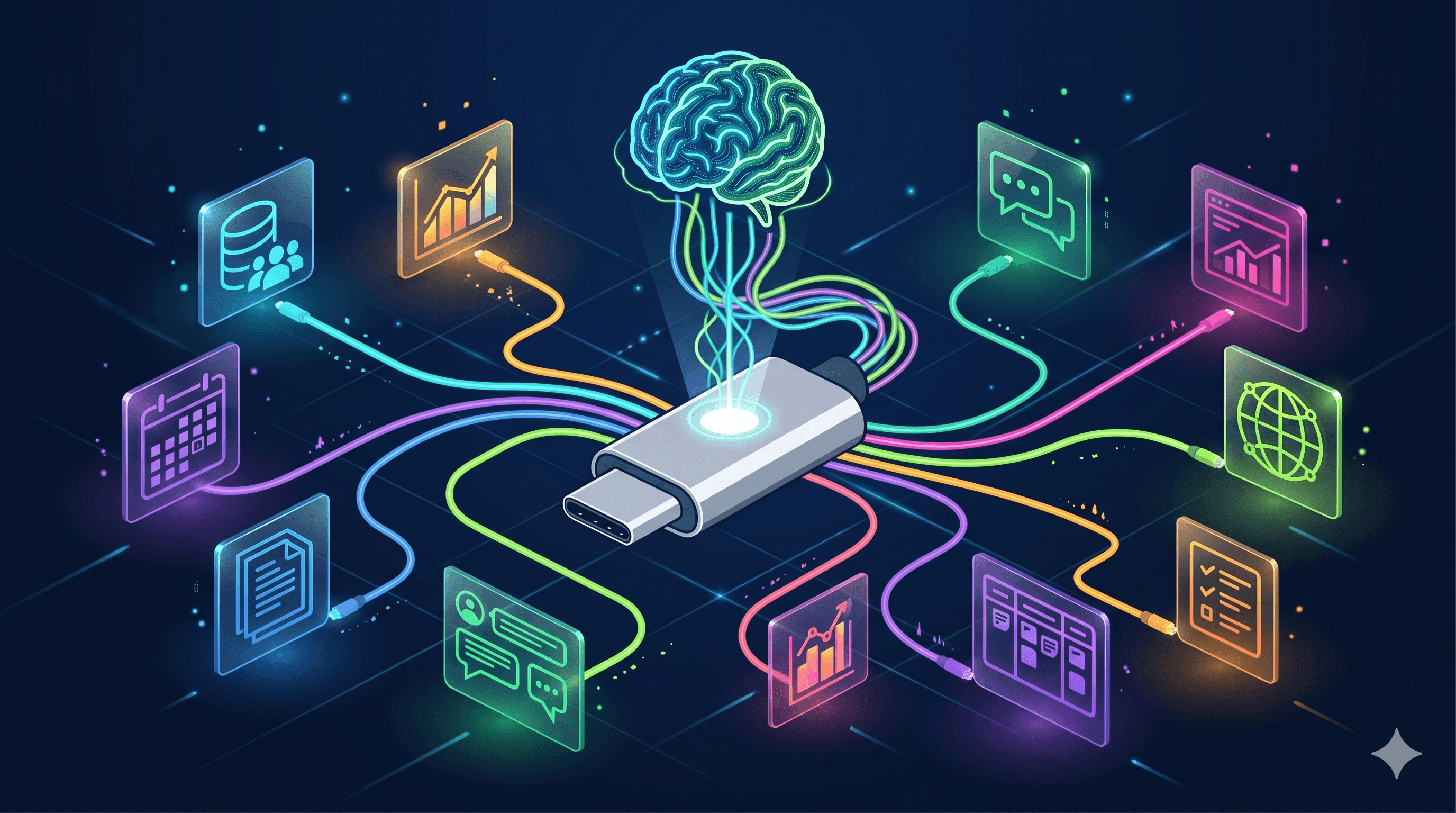
MCP (Model Context Protocol) es un estándar abierto que define cómo los modelos de IA pueden conectarse a sistemas externos para leer y escribir datos. Lo lanzó Anthropic en noviembre 2024. Hoy es el "USB-C de la IA": un mismo estándar que conecta cualquier modelo (Claude, ChatGPT, Copilot, Gemini) con cualquier sistema (Salesforce, HubSpot, tu base de datos interna, Notion, Drive, lo que sea).
Antes de MCP, conectar un modelo de IA con tus datos requería:
¿Te resuena algo de esto?
Si vienes operando con piezas que no terminan de conectar, lo diagnosticamos juntos en 30 min.
Build custom de integraciones por cada combinación.
Auth, rate limiting y paginación manuales por cada servicio.
Mantenimiento continuo cuando las APIs cambiaban.
Con MCP, el vendor publica un servidor MCP, y cualquier agente compatible lo invoca con un solo protocolo. Es la diferencia entre tener que llevar 10 cables distintos vs llevar uno solo.
Lo que pasó en junio 2026
Esto es lo que se anunció en las primeras 48 horas del mes:
ZoomInfo GTM.AI (1 de junio): hizo generalmente disponible su capa "headless" de contexto go-to-market. Su tesis: el próximo campo de batalla no es otra interfaz de chatbot, sino el sustrato de datos que alimenta a cada agente que dice prospectar, enriquecer, priorizar y actuar. Conecta data B2B verificada a Claude, ChatGPT, Microsoft Copilot, Salesforce Agentforce, HubSpot Breeze y Microsoft Copilot Studio.
Salesforce Agentforce: amplió su soporte MCP para que agentes externos lean y escriban en sus objetos de CRM directamente, no solo a través de la UI de Salesforce.
HubSpot Breeze: se acopló al ecosistema, permitiendo que cualquier agente compatible orqueste workflows de marketing directamente sobre data de HubSpot.
Microsoft Copilot Studio: agregó MCP como mecanismo nativo para que agentes empresariales construidos en su stack consuman herramientas externas con governance.
Gong: expandió integración MCP con HubSpot, Salesforce, Microsoft Dynamics 365, permitiendo a equipos de revenue invocar contexto cruzado desde una sola interfaz.
El patrón compartido: datos como capa gobernada accesible por agentes, no como silos protegidos detrás de UIs propias.
Por qué esto cambia el stack de cualquier agencia
Tres efectos concretos que ya estamos viendo:
1. El cliente deja de pedir "una herramienta" y empieza a pedir "un workflow"
Antes, un cliente decía: "necesitamos Salesforce". Hoy dice: "necesitamos que nuestro equipo comercial vea contexto de Salesforce + Gong + HubSpot al mismo tiempo, sin abrir tres tabs". MCP hace eso técnicamente trivial — un agente con acceso a los tres servidores MCP sintetiza la respuesta en una sola consulta.
Para nosotros como agencia, eso significa que los proyectos se venden por outcome (reducir tiempo a propuesta, aumentar contactability, mejorar follow-up rate), no por implementación de herramienta específica. Y los outcomes valen más.
2. La barrera entre "consumer AI" y "enterprise AI" se está disolviendo
Hasta hace poco, las APIs enterprise (Salesforce, SAP, ServiceNow) vivían en un mundo aparte de los modelos consumer (ChatGPT, Claude). MCP las junta. Hoy puedes hacer una consulta en Claude desktop y que invoque data en vivo de tu CRM corporativo, con governance, OAuth y auditoría.
Esto cambia el cálculo de "compra esta herramienta enterprise" vs "usa Claude/ChatGPT + tu data existente". Para PyMEs con presupuestos ajustados, MCP democratiza accesos que antes eran solo enterprise.
3. Tu agencia necesita saber leer arquitecturas, no solo configurar herramientas
El SDR que solo sabe operar HubSpot se commoditiza. El SDR que entiende cómo MCP conecta HubSpot + Apollo + Clay + un agente de scoring custom se diferencia. Lo mismo aplica a equipos de marketing, dev y ops.
En Geek Vibes ya estamos reentrenando al equipo en lectura de arquitecturas MCP, no solo en configuración de herramientas individuales.
Lo que ya implementamos en Geek Vibes con MCP
Tres pilotos en producción este mes:
1. Geek Agent (interno): nuestro stack de prospección B2B ahora orquesta MCP de Apollo + Clay + LinkedIn Sales Navigator + Claude para personalización masiva. Lo que antes requería 5 herramientas y 3 zaps de pegamento, ahora vive en un solo agent loop con governance clara.
2. Cliente PyME en hotelería: integramos servidor MCP custom contra su PMS (HAS) + GA4 + Meta Ads. El gerente comercial pregunta en Claude "¿qué campaña trajo más reservas con ADR sobre $1,500 esta semana?" y recibe respuesta sintetizada en 8 segundos. Antes: medio día de cruzar reportes manualmente.
3. GV Proposals (producto interno): Claude consulta data histórica de propuestas anteriores vía MCP para generar drafts contextualizados al tipo de cliente y servicio. Resultado: 40% menos tiempo de redacción inicial, mayor consistencia en pricing y alcance.
Lo que NO vas a poder hacer (todavía)
Importante para no caer en hype:
1. MCP no resuelve gobernanza por arte de magia.
Tienes que diseñar permisos, audit trails y data access policies con la misma seriedad que en cualquier integración enterprise. MCP simplifica el "cómo se conecta", no el "qué puede ver quién".
2. Las latencias siguen existiendo.
Si tu servidor MCP llama a una API que tarda 4 segundos, MCP no la acelera. Diseña con caching donde aplique.
3. Los rate limits no desaparecen.
Salesforce, HubSpot y Jira tienen estrategias de rate limiting diferentes (per-user, per-org, sliding window). Tu servidor MCP necesita circuit breakers y retry logic, o el LLM se atora en loops de error.
4. No todos los vendors están listos.
Adoption es desigual. Salesforce y HubSpot tienen servidores production-grade. Otros sistemas (especialmente legacy enterprise) requieren que tú construyas el servidor MCP. Eso sigue siendo trabajo de ingeniería real.
Lo que recomendamos hacer en los próximos 30 días
Si diriges una agencia, un equipo de marketing in-house, o un producto digital, este es nuestro playbook:
Semana 1: Inventario.
Lista los sistemas que tu equipo consulta diariamente. CRM, analytics, project management, comms internas, repos. Para cada uno, verifica si ya existe servidor MCP oficial (revisa registry.modelcontextprotocol.io).
Semana 2: Piloto pequeño.
Elige un workflow específico y costoso en tiempo (ej. "reportar performance de campañas semanal"). Conecta los servidores MCP necesarios a Claude desktop o ChatGPT Team. Mide tiempo antes/después.
Semana 3: Governance.
Define quién tiene acceso a qué vía MCP. OAuth scopes, data classification, audit logs. No saltarse esto, especialmente si manejas datos de cliente.
Semana 4: Escalar o pivotear.
Si el piloto ahorró tiempo medible, expándelo a otros workflows. Si no, entiende por qué (datos sucios, prompts mal estructurados, integraciones inmaduras) antes de comprar más herramientas.
La pregunta más importante: ¿y los datos?
Aquí está el matiz que casi nadie discute públicamente. MCP es solo la capa de protocolo. La calidad del output depende totalmente de la calidad de los datos abajo. Si tu CRM está desactualizado, tus eventos de GA4 mal definidos, tu base de prospects tiene 40% de duplicados — MCP solo acelera el acceso a basura.
La inversión que más ROI da en 2026 no es comprar otra herramienta de IA. Es limpiar tus datos. Schema markup, taxonomías consistentes, naming conventions, eliminación de duplicados, eventos bien tipados. Cuanto mejor la base, más palanca te da MCP encima.
Conclusión: la era del "agente que ve tu negocio entero"
El cambio de junio 2026 marca el momento en que los agentes de IA dejaron de operar en una sola herramienta a la vez y pasaron a operar sobre el stack completo de tu negocio. Para agencias, equipos in-house y founders, eso reescribe qué se vende, qué se compra y qué habilidades importan.
Los que entiendan esto temprano van a tener 12-18 meses de ventaja antes de que sea baseline. Los que no, van a competir en la commodity de "configuramos herramientas SaaS".
¿Quieres entender cómo MCP cambia tu stack actual y dónde aplicarlo primero? En Geek Vibes hacemos auditorías de "MCP readiness" en 2 semanas: mapeo de sistemas, oportunidades concretas, roadmap pragmático. Escríbenos a comercial@geekvibes.agency.
Estratégia & Negocio
Google dejó de vender Gemini Code Assist: es la segunda herramienta de código con IA que mata en 2026
El 9 de octubre, Google Cloud confirmó que deja de vender Gemini Code Assist Standard y Enterprise: las suscripciones activas se renuevan hasta 2026 y mueren en 2027. Es la segunda herramienta de código con IA que Google retira este año — en junio ya había apagado Gemini CLI. El patrón pesa más que el producto.