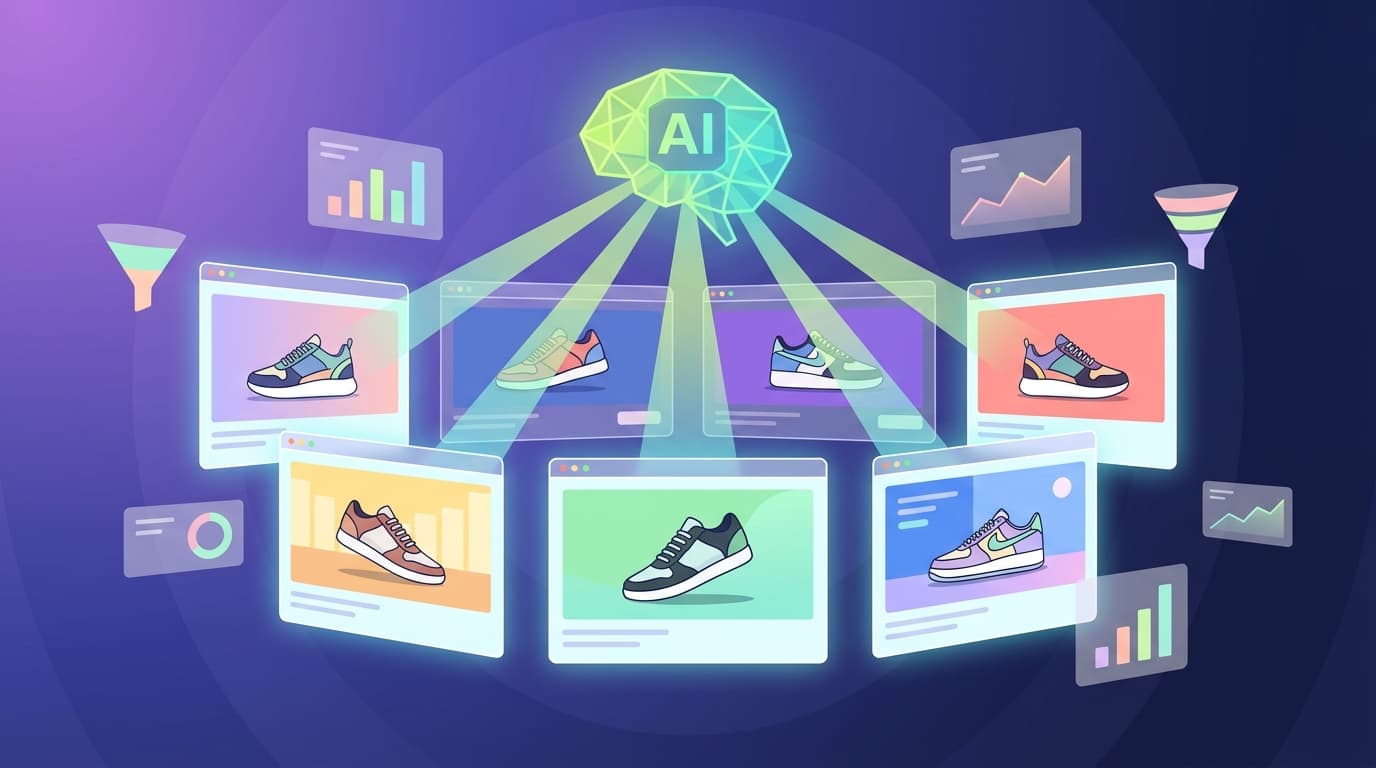
La publicidad programática en 2026 está irreconocible respecto a hace dos años. Las plataformas IA-driven analizan data en tiempo real para optimizar bid strategies y placements — eso ya era estándar. Lo que cambió el juego este año son los dynamic creatives generados al vuelo: variaciones de copy, imagen, video y CTA producidas en milisegundos, ajustadas al perfil de cada usuario individual.
Si estás corriendo paid media con el mismo playbook de 2023, estás dejando dinero en la mesa. Mucho dinero.
Los números que mueven la conversación
El mercado global de AI marketing está valuado en $47.32 mil millones de dólares en 2026, según proyecciones de Statista, y se espera que alcance $107.5 mil millones para 2028. Es crecimiento de 36.6% anual compuesto — uno de los segmentos de software de mayor expansión que existe hoy.
Lo más interesante para operadores: las marcas que consolidan su stack alrededor de plataformas AI-capable reportan reducciones de costos tecnológicos del 50-77% y ROI improvements documentados de hasta 2,101% solo por consolidación estratégica. La consolidación, no la adición.
Qué cambió: del segmento al individuo
El modelo viejo de programmatic era segmentación. Defines audiencias amplias (mujer 25-34, urbana, ingreso medio-alto), creas 3-5 variantes de ad por audiencia, y la plataforma optimiza el bidding.